

If you’re looking for a reliable, colorful vegetable dish, this Easy Roasted Asparagus & Carrots recipe is a fresh, simple side that fits just about any meal. With minimal ingredients and straightforward steps, it delivers tender carrots, crisp-tender asparagus, and lightly caramelized edges that make vegetables genuinely crave-worthy.
Whether you’re cooking a weeknight dinner, prepping vegetables for the week, or planning a holiday spread, this recipe proves that simple roasted vegetables can be both practical and special.
Table of Contents
Why You’ll Love This Easy Roasted Asparagus & Carrots Recipe

This dish checks all the right boxes for busy cooks and vegetable lovers alike.
First, it’s easy and dependable. You only need one pan, a hot oven, and about 30 minutes from start to finish. No complicated techniques, no special equipment, and no hard-to-find ingredients.
Second, the flavor is naturally excellent. Roasting brings out the sweetness in carrots while giving asparagus those lightly crisp, golden tips. Olive oil, garlic, salt, and pepper are enough to let the vegetables shine without overpowering them.
Finally, this recipe is incredibly flexible. It works as a side for everything from roasted chicken to pasta, grain bowls, or plant-based mains. You can dress it up with herbs and lemon or keep it plain and simple for picky eaters.
Ingredients for Easy Roasted Asparagus & Carrots
One of the best things about this recipe is how short and approachable the ingredient list is.
Main Ingredients
- Asparagus – Fresh, firm stalks work best
- Carrots – Regular carrots or rainbow carrots
- Olive oil – For roasting and flavor
- Garlic – Fresh minced garlic or garlic powder
- Salt – Enhances the natural sweetness
- Black pepper – Adds gentle warmth
Optional Add-Ins
- Lemon juice or lemon zest
- Fresh herbs like parsley or thyme
- A pinch of red pepper flakes for mild heat
Ingredient Notes & Substitutions
- Asparagus size matters: Thicker asparagus holds up better to roasting alongside carrots. If your asparagus is very thin, add it to the pan halfway through cooking.
- Oil swaps: Avocado oil works well if you prefer a higher smoke point oil.
- Garlic sensitivity: If raw garlic tends to burn in your oven, use garlic powder instead for a milder, evenly distributed flavor.
- Acid finish: Lemon juice is classic, but a splash of mild apple cider vinegar can give a similar brightness.
- Herb options: Rosemary, dill, or chives all pair nicely with roasted vegetables.
Step-by-Step Instructions
Roasting vegetables is simple, but a few small details make a big difference in the final result.
Step 1 – Preheat the Oven
Preheat your oven to 425°F (220°C). A hot oven is essential for caramelization and preventing soggy vegetables.
Step 2 – Prepare the Vegetables
Wash and dry the asparagus and carrots thoroughly. Trim the woody ends off the asparagus and peel the carrots if desired. Slice the carrots into sticks or diagonal pieces similar in thickness to the asparagus so everything cooks evenly.
Step 3 – Season the Vegetables
Place the vegetables on a large baking sheet. Drizzle with olive oil and sprinkle with salt, pepper, and garlic. Toss well to ensure every piece is evenly coated.
Step 4 – Arrange for Even Roasting
Spread the vegetables into a single layer. Overcrowding the pan traps steam and prevents browning, so use two pans if necessary.
Step 5 – Roast Until Tender
Roast for 20–25 minutes, flipping once halfway through. The carrots should be fork-tender, and the asparagus should have lightly crisp tips and a vibrant green color.
Step 6 – Finish and Serve
Remove from the oven and finish with lemon juice, zest, or fresh herbs if using. Serve immediately while hot.
Pro Tips for Success
- Dry vegetables roast better: Moisture creates steam, so pat vegetables dry before seasoning.
- Cut evenly: Uniform sizes ensure everything cooks at the same rate.
- Use parchment if needed: It helps prevent sticking and makes cleanup easier.
- Flip once only: Too much stirring reduces browning.
- Taste before serving: A final pinch of salt can make the flavors pop.
- Don’t overcook: Mushy asparagus loses its fresh appeal.
Flavor Variations
Once you’ve mastered the base recipe, try these easy twists:
- Italian-Inspired: Add dried oregano and finish with grated Parmesan (optional).
- Garlic Lemon: Double the garlic and add extra lemon zest at the end.
- Herb Roasted: Toss with fresh thyme or rosemary before roasting.
- Spicy-Sweet: Add a pinch of smoked paprika and red pepper flakes.
- Balsamic Finish: Drizzle lightly with balsamic glaze after roasting.
Serving Suggestions
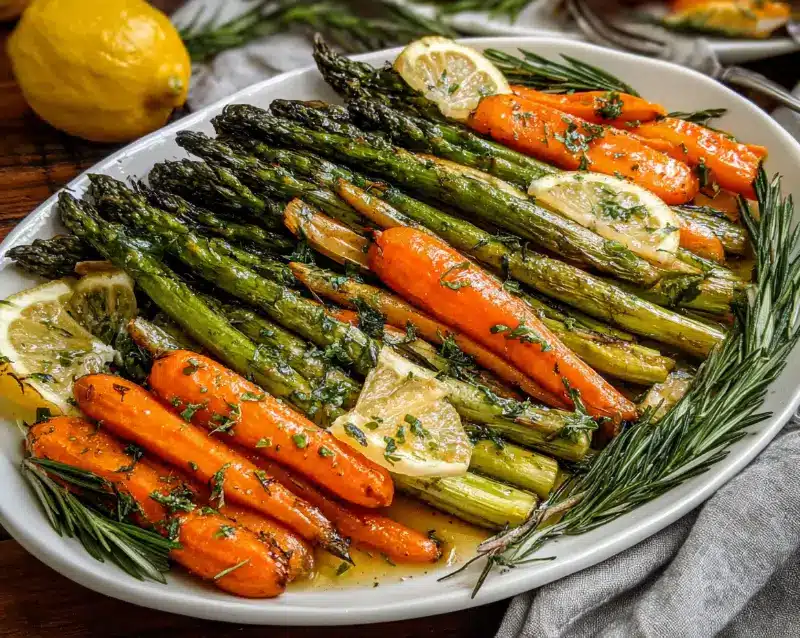
This Easy Roasted Asparagus & Carrots dish pairs well with almost anything:
- Serve alongside roasted chicken, turkey, or baked fish
- Add to grain bowls with quinoa or brown rice
- Toss leftovers into pasta or salads
- Serve as part of a holiday vegetable spread
- Enjoy as a light lunch with hummus or a yogurt-based dip
Because the flavors are mild and fresh, it complements both bold and simple main dishes.
Storage and Freezing Instructions
Refrigeration
Store leftovers in an airtight container in the refrigerator for up to 4 days. Reheat in the oven or a skillet for best texture.
Freezing
While you can freeze roasted vegetables, asparagus tends to soften significantly after thawing. If freezing, cool completely and store for up to 2 months. Reheat directly from frozen in a hot oven.
Print
Easy Roasted Asparagus & Carrots – A Fresh, Simple Side
- Total Time: 35 minutes
- Yield: 4 servings
- Diet: Vegetarian
Description
A fresh, simple vegetable side made with tender roasted carrots and crisp-tender asparagus, lightly caramelized and full of natural flavor.
Ingredients
- 1 bunch fresh asparagus, trimmed
- 3–4 medium carrots, peeled and sliced
- 2 tablespoons olive oil
- 2 cloves garlic, minced or 1 teaspoon garlic powder
- 1/2 teaspoon salt
- 1/4 teaspoon black pepper
- Optional lemon juice or zest
- Optional fresh herbs
Instructions
- Preheat the oven to 425°F (220°C).
- Wash and dry the asparagus and carrots thoroughly.
- Trim the woody ends from the asparagus and cut the carrots into evenly sized pieces.
- Place vegetables on a large baking sheet.
- Drizzle with olive oil and sprinkle with garlic, salt, and black pepper.
- Toss well to coat evenly.
- Spread vegetables into a single layer.
- Roast for 20–25 minutes, flipping once halfway through.
- Remove from oven when carrots are tender and asparagus is lightly crisp.
- Finish with lemon juice or herbs if desired and serve immediately.
Notes
Dry vegetables well and avoid overcrowding the pan for the best caramelization.
- Prep Time: 10 minutes
- Cook Time: 25 minutes
- Category: Side Dish
- Method: Roasting
- Cuisine: American
Nutrition Facts (Per Serving)
| Nutrient | Amount |
|---|---|
| Calories | ~110 |
| Protein | 3 g |
| Carbohydrates | 10 g |
| Fat | 7 g |
| Fiber | 4 g |
| Sodium | ~200 mg |
Values are estimates and may vary based on portion size and ingredients used.
FAQ About Easy Roasted Asparagus & Carrots
Can I make this recipe ahead of time?
Yes, you can roast the vegetables up to one day ahead and reheat them in the oven. Keep in mind that asparagus is best when freshly roasted, so reheating briefly at high heat works best.
How do I prevent soggy vegetables?
Make sure the vegetables are completely dry and not overcrowded on the baking sheet. A hot oven and enough space between pieces are the keys to crisp edges.
Can I use baby carrots?
You can, but slicing them lengthwise helps them roast more evenly. Whole baby carrots may take longer to cook than asparagus.
What temperature is best for roasting vegetables?
A temperature between 400–425°F is ideal. Lower temperatures tend to steam vegetables instead of browning them.
Is this recipe good for meal prep?
Yes, it’s great for meal prep. Store portions in containers and reheat as needed throughout the week.
Final Thoughts
This Easy Roasted Asparagus & Carrots recipe proves that simple ingredients and basic techniques can create a side dish that’s fresh, flavorful, and dependable. Whether you’re cooking for family, guests, or just yourself, this is one of those recipes you’ll come back to again and again.
With endless variations and minimal effort, it’s a practical way to enjoy vegetables at their best—no fuss, no stress, just great flavor.